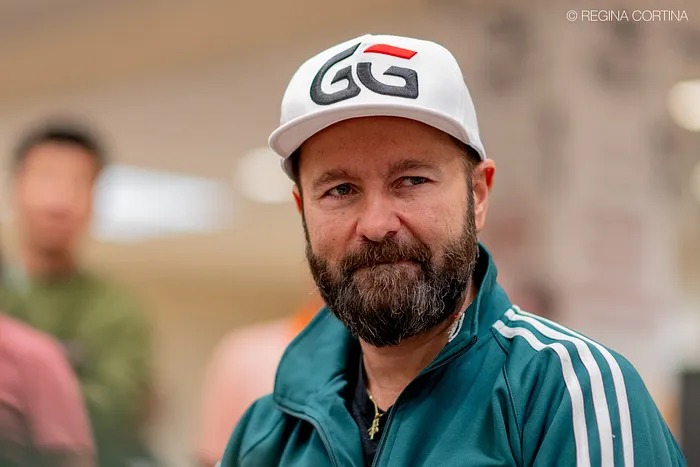
There are poker stories that make you laugh, stories that make you cringe, and then there are stories that make you put your drink down and wonder how anyone ever had the audacity. Daniel Negreanu — a man who has witnessed virtually everything this game has to offer across three decades at the highest levels — recently shared a tale that falls firmly in that last category.
In a video posted to his YouTube channel, which is closing in on one million subscribers, the six-time World Series of Poker bracelet winner recalled a Daniel Negreanu poker scam story from his formative years grinding at the Bicycle Club in Los Angeles in the 1990s. It was a tournament hustle so brazen, so methodically constructed, that KidPoker himself admitted it bordered on “sociopathic” — though he conceded he couldn’t help but find the sheer audacity of it darkly amusing.
This wasn’t a run-of-the-mill angle-shoot or a grey-area rules exploit. This was a fully premeditated financial con dressed up in poker clothes. And for a while, at least, it worked beautifully.
How the Daniel Negreanu Poker Scam Was Built: Selling More Than You Own
To understand the scam, you first need to understand the perfectly legitimate practice of selling action in poker tournaments. Players routinely offer backers a percentage of their potential winnings in exchange for funding their buy-in — or part of it. It’s a cornerstone of the poker economy, especially at lower and mid-stakes levels where bankroll management is a constant battle.

The con artist at the center of this Daniel Negreanu poker scam account weaponized that trust completely. Using a $1,000 buy-in tournament as his example, KidPoker explained how the player would work the casino floor before the event even began, approaching anyone who’d listen with an aggressive sales pitch — “Hey boss, want to buy 5%? Want to buy 10%?”
The critical detail: the scammer would deliberately oversell his action, collecting far more backing than his actual tournament stake required. He’d sell $2,500 worth of percentages for a tournament that cost just $1,000 to enter. That left $1,500 in his pocket before a single card was dealt.
But here’s where the real corruption of the scheme revealed itself. Because he had oversold, cashing in the tournament would be a financial disaster — he’d owe his backers more than he could ever pay out. So his incentive was no longer to win. It was to lose.
How the Daniel Negreanu Poker Scam Played Out at the Table
The scammer didn’t simply dump his chips and go home. That would have been too obvious, too sloppy. Instead, he actually played well — building a respectable stack through legitimate poker. Then, once he’d accumulated enough chips to matter, he turned to the players around him at the table.
“Hey boss, wanna trade 5%? Wanna trade 10%?”
By swapping percentages of his chip stack with opponents mid-tournament, he offloaded whatever remaining liability he had onto unsuspecting players. Then, with $1,500 guaranteed in his pocket and no meaningful stake left in the outcome, he walked out the door. “He’s home drinking snake juice or whatever the hell he was drinking back then,” Negreanu quipped, imagining the scammer lounging at home while his backers anxiously watched chips get shoved across a felt that had nothing to do with their money anymore.
Play Poker with People You Can Trust
Hearing about a Daniel Negreanu poker scam story like this is a sharp reminder of why playing in a vetted, trustworthy environment matters. NYCPokerClubs.com is New York City’s premier destination for private poker clubs and curated games — built on integrity, community, and serious play. Whether you’re a weekend player or a seasoned grinder, there’s a seat at a table with your name on it.
Why the Daniel Negreanu Poker Scam Story Cuts Deeper Than Cheating
Despite finding the story grimly funny in retrospect, Negreanu was unequivocal about its moral gravity. “I find it crazy that people do this,” he told his viewers. “I could never do something like that — you have to have a sociopathic tendency. This is a scam, that’s a scammer, that’s someone who’s really dishonest.”
What makes his choice of the word “sociopathic” so pointed is the psychology it implies. This wasn’t a player who stumbled into wrongdoing or rationalized a bad decision in the heat of the moment. The scammer built a system — a machine designed to extract money from trusting people who had done nothing wrong. Each step was calculated. Each handshake was a lie. That requires a deliberate and sustained detachment from conscience that goes well beyond ordinary dishonesty.
What the Daniel Negreanu Poker Scam Tells Us About the Game Today
It’s tempting to file this story under “things that couldn’t happen today.” And in some respects, that’s fair. The modern tournament ecosystem has considerably more safeguards than the informal 1990s circuit Negreanu was navigating as a young Canadian in Los Angeles. Action deals are increasingly documented via apps or at minimum text message threads. The poker community’s awareness of fraud has sharpened — partly due to several high-profile scandals that have kept the subject front and center in recent years.
But the fundamental vulnerability this Daniel Negreanu poker scam story exposes — the reliance on personal trust in an informal, transactional economy — hasn’t gone away. Poker still runs largely on reputation and relationships. Action-selling remains as common as ever at the mid-stakes level, and formal documentation is the exception, not the rule. The tools for fraud have evolved; the human dynamics enabling it largely haven’t.
Know who you’re backing. Document what you can. And if someone is working the casino floor a little too hard before registration closes, ask a few more questions before you hand over your money.
Negreanu’s Willingness to Name It Matters
One of the more underappreciated aspects of Daniel Negreanu’s media presence is the candor he brings to poker’s uncomfortable corners. He could coast on highlight reels and nostalgia — audiences would reward him for it. Instead, he consistently uses his platform to call things plainly: a Daniel Negreanu poker scam story gets told not for shock value, but as a public service to a community that still relies on trust to function.
Poker is a game built on information asymmetry. The more honestly its prominent voices speak about the environment surrounding the felt, the better equipped every player becomes — from the weekend recreational player to the seasoned grinder chasing their first major cash.
So let this story from the Bicycle Club serve as a useful touchstone: in poker, as in life, the most dangerous person at the table isn’t always the one holding the most chips.
Original editorial piece inspired by Daniel Negreanu’s May 2026 YouTube video.